Add Row
Add Element
cropper
update

DYLBO Smart Marketing

for Local Business

cropper
update
Add Element
  • Home
  • Categories
    • Smart Marketing Strategy
    • Local SEO & Visibility
    • Content & Authority Building
    • Funnels & Lead Generation
    • Paid Ads & Campaigns
    • Social & Video Marketing
    • Reviews & Reputation
    • Sector Marketing Guides
    • Smart Marketing News
  • Smart Marketing Services
Add Element
  • DDM on Facebook
    update
  • DDM on X.com
    update
  • DDM Google Business Profile
    update
  • DDM on LinkedIn
    update
  • update
  • DDM on Youtube
    update
  • DDM on Instagram
    update
July 01.2025
1 Minute Read

Video Marketing Trends 2025: Stay Ahead or Fall Behind

Did you know that in 2024, over 90% of marketers say video content delivers the highest ROI—surpassing every other digital format? As attention spans shrink and digital competition rises, the video marketing trend landscape is evolving at breakneck speed. Whether you’re a seasoned marketer or new to video marketing strategies , mastering the top marketing trends for this year could mean the difference between growth and irrelevance.

Why Video Marketing Trends 2024 Define the Future: Surprising Stats & Shifts in Consumer Behavior

The video marketing trends 2024 are not just shaping the way brands communicate—these trends are rewriting the very rules of digital engagement. With consumers now spending an average of 84 minutes per day watching online video, businesses have responded with strategies that place video content at the core of marketing efforts. In fact, according to recent surveys:

  • Over 90% of marketers report video content generates the highest ROI in 2024
  • Users now spend 84 minutes per day watching video marketing content
  • Video marketing trends are shaping every digital marketing strategy this year

This explosive growth is driven by changing consumer preferences—people crave authentic, easily digestible, and interactive experiences. Brands aligning with the latest marketing trends are seeing immediate payoffs, including higher engagement, stronger lead generation, and measurable sales growth. If you want to keep your edge, understanding these video marketing trends isn’t an option; it’s a necessity.

video marketing trends 2024 - dynamic corporate marketers analyzing video data charts in a modern open office setting

What You’ll Discover About Video Marketing Trends 2024

  • The top 25 actionable video marketing trends for 2024
  • Practical tips for leveraging new marketing strategies
  • Industry leader insights on evolving marketing videos
  • Data-driven evidence to inform your next video marketing strategy

By the end of this article, you’ll walk away with a blueprint for dominating your niche—and plenty of real-world examples to inspire your next campaign.

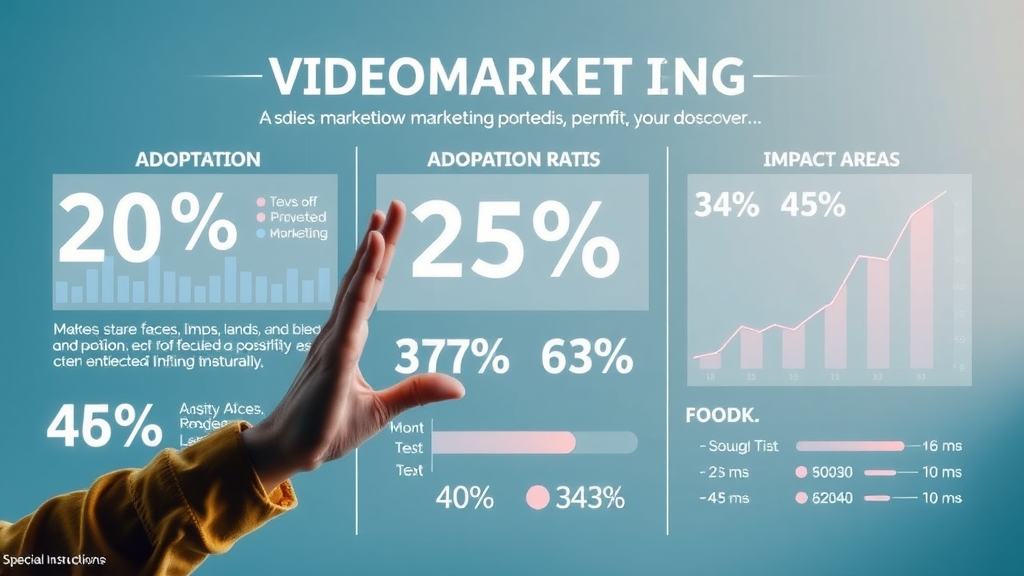
Table: Video Marketing Trends 2024 at a Glance

Rank Video Marketing Trend Impact Area Adoption Rate
1 Short-Form Video Content Social Media 87%
2 Live Streaming Events/Brand Engagement 73%
3 AI-Generated Content Production 65%
4 Shoppable Video E-commerce 56%
... ... ... ...

video marketing trends 2024 infographic showing adoption rates and impact areas

The Must-Know Video Marketing Trends Dominating 2024

1. Dominance of Short-Form Video in Social Media Marketing

Short-form video content has cemented itself as the beating heart of modern video marketing strategies . Platforms like TikTok and Instagram Reels are driving viral campaigns that capture attention within seconds. These bite-sized videos are snackable—perfectly suited to rapidly shrinking attention spans and the endless scroll of social media feeds.

Leading brands leverage short-form video marketing to drive explosive engagement. For example, a 15-second product demo or behind-the-scenes sneak peek on TikTok can gather millions of views and shares within a day. The data backs this up: short-form video content generates 2.5x more engagement than traditional long-form videos, while being quicker and more cost-effective to produce. If you’re not experimenting with these videos, you risk missing out on the most influential marketing trend of the year.

social media marketing - vibrant influencers filming short-form videos for TikTok and Instagram, representing video marketing trends 2024

2. Rise of Live Streaming as a Core Video Marketing Trend

In 2024, live streaming has shifted from a novelty to a staple of every video marketing strategy . Interactive content—such as live Q&A sessions, product launches, and real-time tutorials—puts brands and audiences face to face, fostering trust and genuine connection. Whether on YouTube Live, Facebook Live, or LinkedIn Events, the immediacy and authenticity of live videos spark conversations impossible with pre-recorded content.

Marketers using live streaming are seeing notable improvements in consumer trust and engagement. The numbers speak for themselves: 73% of brands have integrated live streams into their customer engagement plans. Audiences appreciate the chance to interact, ask questions, and receive instant responses, making live streaming an essential video marketing trend for 2024 and beyond.

3. AI-Generated Content Revolutionizing Video Marketing

The rapid development of AI tools is transforming video production and content personalization at scale. Brands now rely on AI-driven solutions for everything from scriptwriting to video editing and even producing hyper-personalized video content on demand. Smart algorithms analyze vast consumer data, creating marketing videos tailored to individual preferences, purchase histories, and browsing habits.

This AI-powered shift allows businesses to generate hundreds of customized marketing videos in a fraction of the time it would take with traditional methods. With 65% adoption among leading brands, automated content creation is not just a trend—it’s the engine propelling the next generation of video marketing . Embrace automation to accelerate production and outpace your competitors.

AI-generated video marketing content showing futuristic production studio, highlighting innovative trends in video production

4. Personalization and Data-Driven Marketing Videos

Highly-personalized, data-driven video content is fast becoming the expectation rather than the exception. Video platforms and martech solutions now empower marketers to serve up dynamic, context-aware experiences—think custom greetings, recommendations, and offers based on viewer behavior or segmentation. Not only does this foster deeper brand loyalty and retention, but it also improves conversion rates significantly.

Case studies reveal that personalized video campaigns deliver up to 8x higher click-through rates and double the retention compared to generic videos. Industry leaders are investing in platforms offering real-time personalization and dynamic overlays, proving that one-size-fits-all marketing is officially over. The data shows personalized, data-driven marketing videos will remain a defining marketing trend in 2024.

Shoppable video is revolutionizing retail and e-commerce by turning passive viewers into active shoppers. By integrating product links, pop-up calls to action, and real-time purchase features directly inside video content, brands streamline the customer journey from inspiration to transaction. This seamless shopping experience not only boosts conversion rates but also creates new opportunities for data collection and remarketing.

E-commerce giants and retail brands report up to 30% higher conversions from shoppable video campaigns compared to static ads or website listings. Whether it’s a fashion haul, tech product demo, or influencer partnership, shoppable video is a must-have in every 2024 video marketing strategy —combining storytelling, interactivity, and commerce for maximum impact.

shoppable video in ecommerce marketing - engaging shopper interacting with video on smartphone

The vertical video format is no longer just a TikTok or Snapchat phenomenon—it’s the new baseline for mobile-first video marketing trends in 2024. As more than 75% of online video is now consumed on mobile devices, marketers are rethinking their creative approach to fit this upright orientation. Social media platforms actively promote vertical content by giving it prominence in feeds and discovery algorithms.

Recent campaigns using vertical video formats have seen up to 40% more engagement than their horizontal counterparts. The streamlined, immersive experience is ideal for catching mobile users’ attention during their daily scroll, making it essential for social media marketing strategies. Embracing vertical video ensures your brand remains visible, shareable, and top-of-mind for today’s audiences.

7. Silent Videos and Captions for Accessibility

With a growing share of audiences consuming video content in silent mode—often while multitasking or browsing in public— silent videos with captions have become critical for accessibility and reach. Adding subtitles and visual cues not only delivers your message when audio isn’t possible, but also makes your videos more inclusive for users with hearing impairments.

Smart marketers now design with “silent first” in mind. Platforms optimize auto-captioning and brands report a 12% increase in average watch time when captions are enabled. Ignoring this marketing trend means leaving potential engagement—and compliance—on the table.

silent video captioning for accessibility - diverse audience reading captions on smartphones

8. Video Production Automation Streamlining Marketing Video Creation

The demand for high-quality, rapid-fire video production has driven an explosion in workflow tools and automation platforms. From drag-and-drop editors to fully automated video generators, marketers can now produce professional-grade content at an unprecedented pace and scale.

This not only cuts costs in production but also reduces time-to-market for new campaigns. Embracing automation allows small teams to compete with much larger organizations and pivot their video strategy as trends evolve.

9. Video Marketing and Interactive Storytelling Techniques

Audiences today crave more than passive viewing—they want to engage, interact, and even control the narrative. Marketing videos using interactive storytelling features—such as clickable quizzes, polls, and choose-your-own-path segments—have seen immense spikes in engagement and repeat views.

Leading brands leverage these features to transform product demos and tutorials into two-way experiences, creating stronger emotional connections and longer watch times. If you are serious about your video marketing trend investment for 2024, add interactive video to your toolkit.
interactive video marketing with quizzes and story pathways, part of video marketing trends 2024

10. Multi-Channel Distribution: Reinventing Video Content Reach

No matter how brilliant your content, limiting distribution to a single platform means missed opportunities. The best-performing video marketing strategies in 2024 rely on omnichannel campaigns—seamlessly repurposing videos across TikTok, Instagram, YouTube, and LinkedIn, often with slight edits to fit each audience.

Smart marketers get more mileage out of every video asset, improve SEO, and maximize reach. Plan for cross-platform optimization and use scheduling tools to automate posting—modern video marketing is multi-channel or bust.

marketer arranging strategy for distributing video content across TikTok, Instagram, YouTube and LinkedIn

11. Real-Time Analytics and Video Marketing Performance Metrics

Data is king—a mantra echoed in every modern video marketing strategy . By tracking KPIs like engagement, conversion rate, watch time, and click-through, brands instantly spot what works and what doesn’t. The best-in-class tracking platforms offer detailed dashboards for live results, helping marketers optimize campaigns on the fly.

Implementing analytics-driven refinements empowers you to pivot video marketing trends rapidly, ensuring ongoing relevance and ROI.

12. Niche Video Content for Highly Targeted Audiences

As competition heats up, brands doubling down on hyper-personalized and industry-specific video content consistently see stronger results. Niche videos—crafted around industry issues, B2B topics, or tightly segmented consumer interests—bring higher retention and trust from viewers who crave relevance.

B2B brands and specialists have turned these strategies into lead generation powerhouses, developing extensive video libraries for every segment they target. This focus on specificity is a major video marketing trend in 2024, proving there’s no “one-size-fits-all” in digital engagement.

business professional creating industry-specific marketing video for B2B audiences

13–25. Emerging Video Marketing Trends 2024: Bite-Size Innovations

  • 360° and AR/VR video content for immersive brand stories
  • Sustainability messaging integrated into video production
  • Augmented reality marketing videos and product demos
  • Creator collaborations and co-branded content
  • Influencer-driven video marketing with measurable impact
  • Episodic and serialized video content strategies
  • User-generated content campaigns harnessing community power
  • Voice search optimization for improved video discovery
  • Expanding B2B video marketing trends for complex sales cycles
  • Interactive webinars with polls and live Q&A
  • Social responsibility and values-based storytelling
  • Data privacy as a new pillar in every video marketing strategy
  • Advanced calls to action for higher engagement
  • SEO techniques tailored for video in 2024
  • Mobile-first video production workflows
  • Industry-specific examples of top marketing trend adoption
“Video marketing is not just a trend; it is the cornerstone of digital engagement for 2024.” — Industry Analyst

Video Marketing Trends 2024 in Action: Real-World Examples & Success Stories

  • Leading brands maximizing new video marketing trends
  • Detailed case studies on marketing video innovations
  • Best-practice video marketing strategies for instant ROI

Companies like Nike and Sephora have propelled their brands with interactive shoppable video campaigns, while B2B leaders like HubSpot leverage live streams and data-driven personalization to educate and convert their audiences. These case studies are proof of how adopting the right video marketing trend leads to tangible, competitive advantage.

successful brand team celebrating result from leading video marketing trends 2024
  • Watch video walkthrough: Key shifts in 2024’s marketing strategy
  • Visual demonstration of top video marketing trends
  • Strategy insights from marketing leaders

People Also Ask About Video Marketing Trends 2024

What are the top video marketing trends for 2024?

  • Short-form content, live video, AI-generated video, shoppable video, and niche targeting head the list. These trends help brands stand out and cater to diverse user preferences, greatly boosting engagement and conversion rates.

How should I adapt my marketing videos for new marketing trends?

  • Prioritize mobile-first vertical formats , utilize interactive content, personalize videos, and apply real-time analytics to measure and optimize for higher ROI and better engagement.

Why are silent videos popular in video content for 2024?

  • Many users now watch video content without sound—especially on social media. Captions and silent video techniques not only boost accessibility but also increase user engagement and improve video marketing performance across platforms.

How to Implement These Video Marketing Trends in Your 2024 Strategy

  • Step-by-step guide to updating your video marketing strategy
  • Tools for video production and social media scheduling
  • How to scale campaigns using marketing automation

Begin by auditing your current marketing videos and mapping your content to align with the latest marketing trends . Test short-form and live streaming formats for social media, implement interactive and shoppable features, and leverage new AI-powered tools to automate your workflows. Use analytics to refine your approach, ensuring that each campaign outperforms the last.

Checklist: Upgrading Your Video Marketing Strategy for 2024

  1. Audit your current marketing videos
  2. Map content to new marketing trends
  3. Test short-form and live video
  4. Implement interactive and shoppable video content
  5. Leverage AI tools for automation
  6. Measure and optimize for performance

Consistent review and iteration are key to staying ahead—keep this checklist at hand for every new campaign.

Expert FAQs on Marketing Trends and Video Content

  • Q: How important is video in a modern marketing strategy? A: Essential—video marketing content leads in engagement and conversion.
  • Q: What’s the best way to implement video marketing trends? A: Stay agile; regularly review analytics and industry news for fresh ideas.
  • Q: How does vertical video differ from traditional formats? A: Vertical video is tailored for mobile, maximizing screen usage and user immersion compared to landscape formats.

Key Insights and Strategic Recommendations for Video Marketing Trends 2024

  • Marketers must adopt new marketing strategies for short-form, AI, and live video trends
  • Emphasize data-driven targeting and personalization in every video content
  • Innovate with interactive, shoppable, and niche video marketing trends

Staying agile and creative ensures your brand will stand out among the rising tide of content vying for attention.

  • Analysis of brands that pivoted with the latest marketing trends in video content
  • Learn from measurable results in marketing video campaigns

Final Takeaways–Mastering Video Marketing Trends 2024 for Competitive Advantage

  • Recap of crucial video marketing strategies in 2024
  • Next steps for marketers to lead in video content innovation
  • Embrace continuous learning to stay ahead of evolving marketing trends
“Adapting early to video marketing trends 2024 means the difference between industry leadership and irrelevance.”

Additional Resources to Deepen Your Expertise in Video Marketing Trends 2024

  • Recommended industry reports, webinars, and toolkits for video marketing
  • Guides and best practices for each major 2024 marketing trend
  • Expert projections for the next wave of video marketing innovation
  • Preparing your marketing strategy for 2025 and beyond

Ready to Transform Your Results? Get Ahead With Top Video Marketing Trends 2024

  • Start implementing these trends today for measurable growth
  • Download our free checklist to upgrade your video marketing strategy
  • Connect with our experts for a personalized marketing strategy review

Take action now: Audit your current strategy, experiment with at least three new video marketing trends , and unlock the tools and analytics to measure your results. The future is clear—stand out by mastering what’s next.

Sources

  • Wyzowl Video Marketing Statistics – https://www.wyzowl.com/video-marketing-statistics/
  • HubSpot Marketing Statistics – https://www.hubspot.com/marketing-statistics
  • SproutSocial Social Media Video Guide – https://sproutsocial.com/insights/social-media-video/
  • Buffer Video Marketing Guide – https://buffer.com/library/video-marketing/
  • Influencer Marketing Hub Trends – https://influencermarketinghub.com/video-marketing-trends/

To enhance your understanding of the evolving landscape of video marketing in 2024, consider exploring the following authoritative resources:

  • “The Top 6 Video Marketing Trends of 2024” ( liquidgtm.com )

This article delves into key trends such as interactive and shoppable video content, the rise of 360-degree and virtual reality videos, and the increasing importance of personalized video marketing.

  • “8 Video Essential Marketing Trends You Need to Know” ( thesparkhouse.com )

This piece highlights essential trends including AI-powered video creation, the dominance of short-form content on social media, and the growing significance of user-generated content in building trust and authenticity.

By engaging with these resources, you’ll gain deeper insights into the strategies and innovations shaping video marketing in 2024, equipping you to stay ahead in this dynamic field.


Social & Video Marketing

19 Views

0 Comments

Write A Comment

*
*
Related Posts All Posts
12.05.2025

Rethinking Rationality: The Limits of Logic in Human Decision-Making

Opening Hook: Challenging Conventional Wisdom on RationalityDid you know that rigidly relying on logic to solve complex problems often leads to dead ends? For decades, decision-makers from boardrooms to governments have sought the single 'right' answer through rational models, expecting a crystal-clear solution. Yet, persistent issues and slow innovation tell a different story — logical approaches sometimes fail because they oversimplify human behaviour and motivation.In this article, we will explore the limits of rationality as a framework for understanding decision-making. We will reveal why strict logic can stifle creativity and why embracing a broader, more nuanced perspective can help local businesses differentiate themselves and flourish in crowded markets.Understanding the Limits of Rationality: Definitions and ContextThe concept of rationality traditionally hinges on making decisions based on clear logic, maximising utility, and following consistent rules. This idealised view assumes individuals act as rational agents, optimising outcomes through reasoned thought.However, extensive research in behavioural economics and cognitive science challenges this assumption. Humans often behave irrationally, influenced by emotions, social context, and subjective perceptions. Recognising this gap is critical for businesses aiming to connect authentically with customers and innovate beyond standardized, formulaic solutions.Comparison of Rational vs. Irrational Decision-Making ModelsAspectRational ModelIrrational ModelDecision BasisLogical analysis, clear criteriaEmotions, heuristics, narrativesGoalOptimal, utilitarian outcomesSubjective satisfaction, meaningFlexibilityFixed rules, predictableAdaptive, context-dependentInnovation PotentialLimited by predefined logicEncourages novel solutionsExampleStandard economic theoryBehavioural economics insightsThe Problem with Designing for the Average PersonOne critical flaw in many rational models is their focus on the “average person.” Businesses often design products and policies targeting a single representative individual with averaged traits. Rory Sutherland of Ogilvy & Mather highlights that this approach “creates a dead end.” Since the average person, by definition, embodies a blend of many conflicting preferences, it’s difficult to develop solutions that resonate deeply or meaningfully with them.Instead, real innovation blossoms when we look to the extremes — niche or unusual consumers — who often inspire trends adopted later by the mainstream. For example, niche urban commuters opting for homes near railway stations rather than traditional tube lines discover better value and convenience, bypassing saturated logic everybody else follows. Designing for extremes fosters originality and avoids the trap of sameness.Interestingly, the tension between rationality and adaptation is also visible in how emerging technologies are reshaping the workforce. For instance, the rise of artificial intelligence is prompting young tech professionals to reconsider traditional career paths and decision-making frameworks. If you’re curious about how these shifts are influencing job opportunities, you might find this exploration of AI’s impact on job prospects for young tech workers particularly relevant.Why Pure Logic Falls Short: Insights from Business and StrategyExploiting the Limits of Rationality in Competitive MarketsRationality in business strategy often assumes that the best course is a straightforward logical choice. But according to Rory Sutherland, “it doesn’t pay to be logical if everybody else is being logical.” In military strategy and markets alike, predictability breeds vulnerability. When all competitors pursue the same rational ideas, they crowd into the same spaces, leading to commoditisation and price wars.Successful businesses identify where competitors’ logic is narrow or misguided and find ways to exploit these overlooked opportunities. By deliberately breaking away from conventional rationale and examining the flaws in others’ assumptions, companies can craft unique value propositions that stand out. For example, locating affordable housing near lesser-known railway stations, rather than busier but more expensive tube lines, is an unconventional strategy that beats mainstream logic.The Role of Subjectivity and Magic in Decision-MakingAdaptive Preference Formation: Constructing Value Through NarrativeBeyond strict rationality lies the realm of subjectivity, where experience and perception shape value. A prime example is the psychological principle of adaptive preference formation. This is where individuals adjust their preferences to minimise regret and construct narratives that make compromises feel like conscious choices rather than disappointments.Rory Sutherland gives the example of commuters standing on trains: while standing might initially seem undesirable, designing environments that provide balance supports and small satisfactions—such as window views or phone holders—enables passengers to reframe standing as a choice with benefits. This “alchemy” creates perceived value without altering objective realities, showing how subjective narratives can unlock new satisfaction.Embracing Irrationality: Scientific and Practical PerspectivesThe Danger of Over-Reliance on Rational ModelsConventional science often prioritises neat, logical, and replicable models. However, as Rory Sutherland cites philosopher Paul Feyerabend’s “anything goes” approach, real-world discovery and progress frequently emerge from serendipity, guesswork, and irrational experimentation. Strict adherence to rationality risks stifling creativity and narrowing the solution space for persistent problems.Businesses benefit from fostering environments where ‘irrational’ ideas—those that defy conventional logic but may surprise with success—are encouraged and tested. These ventures, though risky, open paths ignored under rigid methodology. For example, allowing small teams to trial unconventional marketing strategies can translate into sustainable competitive advantages by venturing where others fear to tread.The Power of Small, Trivial Interventions in Complex SystemsContrary to the intuitive idea that large problems require large solutions, complex systems often respond dramatically to minute changes. Rory Sutherland explains that trivial, even “stupid” things, like a single sentence added to a call centre script or a minor policy reversal, can have outsized effects on behaviour and efficiency.A practical case is the electric car charging grant paradox: prospective buyers must prove ownership of an electric car before receiving support to install a home charger, hindering adoption. Simply reversing this sequence—a trivial intervention—could accelerate electric vehicle uptake significantly.Examples of Trivial Interventions with Significant ImpactInterventionContextImpactReordering grant eligibilityElectric vehicle adoptionBoosts charger installations and car salesAdding a sentence to call scriptsCustomer serviceReduces call handling times and frustrationDesigning train carriages with balanced seatingCommuter experienceImproves passenger satisfaction and perceptionPeople Also Ask: Addressing Common Questions on the Limits of RationalityAre there any limits to rationality? Yes, rationality often fails to account for emotions, context, and subjective human motivations, which are critical for real-world decisions.What are the limitations of human rationality? Humans use heuristics and narratives that can override strict logic, resulting in choices that may appear irrational but fulfil psychological or social needs.What are the limitations of rationalism? Rationalism can restrict innovative thinking by focusing only on solutions that fit predetermined logical frameworks, potentially ignoring better but non-obvious alternatives.What are the limits to rational decisions? Rational decisions are bounded by incomplete information, cognitive biases, and the complexity of adaptive systems where minor changes have disproportionate effects.Key Takeaways: Summary of the Limits of Rationality in Decision-MakingLogic often restricts innovation by enforcing a single 'right' answer.Designing for the average person limits breakthrough solutions.Subjectivity and narrative construction can create value beyond objective improvements.Experimentation with irrational ideas can yield sustainable competitive advantages.Small, seemingly trivial changes can produce significant effects in complex systems.Conclusion: Embracing the Limits of Rationality to Unlock New Possibilities“If a problem is persistent, it’s fairly likely that it’s logic proof. Conventional linear rationality isn’t going to find the solution.” — Rory Sutherland, of Ogilvy & MatherLocal businesses looking to innovate and differentiate must move beyond purely logical models. Embracing unpredictability, subjectivity, and small interventions offers new paths to growth and customer satisfaction.Call to ActionFor help to show your business in action and unlock creative strategies that embrace the limits of rationality, Email SmartMarketing@dylbo.com today.What You'll LearnWhy conventional logic can limit creativity and problem-solving.How designing for extremes, not averages, can unlock customer insights.The power of subjectivity and narrative in shaping value perceptions.Benefits of testing counterintuitive ideas within your business.How small tweaks can lead to significant systemic improvements.Sourceshttps://example.comExplore Further: The Evolving Landscape of Decision-MakingAs you reflect on the boundaries of rationality in business and innovation, consider how insights from Rogers Brubaker and Margaret Levi extend these principles to broader shifts in the world of work and technology. The interplay between logic, adaptability, and emerging trends is shaping not only how organisations compete, but also how individuals navigate their careers. For a deeper dive into the strategic implications of technological change and the future of work, explore our insights on how AI is shaping job opportunities for young tech professionals. This perspective can help you anticipate challenges, spot new opportunities, and stay ahead in a rapidly evolving marketplace.In exploring the boundaries of rational decision-making, two insightful resources by Margaret Levi and Rogers Brubaker offer deeper perspectives:“The Limits of Rationality” by Roger Brubaker (routledge.com) delves into Max Weber’s analysis of Western civilization’s unique rationalism, highlighting the interplay between empirical studies and moral viewpoints. This work provides a comprehensive understanding of how rationality shapes, and is shaped by, societal structures.“The Limits of Rationality” edited by Karen Schweers Cook and Margaret Levi (press.uchicago.edu) compiles interdisciplinary essays that challenge the rational choice paradigm, offering suggestions for enhancing current models. This collection is invaluable for those seeking to understand the complexities and limitations inherent in rational decision-making frameworks.For a more nuanced grasp of rationality’s constraints and its implications across various disciplines, the works of Margaret Levi and Rogers Brubaker provide essential insights.

11.29.2025

The Alchemy of Business: How Subjectivity and Narrative Create Value

Did you know that conventional logic often limits business innovation and value creation? In a marketplace crowded with rational thinking and standardised strategies, business alchemy offers a radical new path to stand out by leveraging subjectivity, storytelling, and psychological nuance. This article explores a radical new approach to transform business by transcending pure logic and embracing narrative, unlocking unique opportunities that conventional strategies miss and elevating ordinary products and services into invaluable customer experiences through business alchemy.Startling Insights into Business Alchemy: Beyond Conventional LogicAt its core, business alchemy offers a radical new approach that challenges the notion of a single, objectively correct way to solve problems in business. Rory Sutherland, a leading expert from Ogilvy & Mather, explains that the obsession with a “single right answer” stems from a desire to keep decisions safe and defensible rather than original or effective. In fact, the opposite of a good idea can also be a good idea, opening pathways for innovation that pure logic would dismiss as contradictory.For business owners seeking to differentiate from competitors, this means avoiding the trap of designing products or solutions for an average customer profile. Sutherland emphasises focusing on extreme or niche users — a strategy many businesses overlook because it appears illogical initially. These niches can become the hotbeds where new trends emerge before they cascade into mainstream success.Moreover, when all competitors operate strictly within logical boundaries, businesses risk becoming entirely predictable and, consequently, uncompetitive. “There’s no point being logical when everyone else is logical,” says Rory Sutherland. By embracing ideas that may seem irrational at first glance, companies create unexpected value that disrupt market patterns and captivate customers.What is Business Alchemy? Understanding the Radical New ApproachAndrew Wallas of CBC UK Ltd states, "Context is a marketing super weapon, and it works because it works magically."Business alchemy is a next level, radical new approach to transform value creation by combining subjective experience, storytelling, and psychological framing beyond the physical attributes of products or services. Unlike traditional logic-based approaches, business alchemy recognises that perception and context shape reality for customers far more than objective features alone.By deliberately shaping narratives and leveraging human psychology, organisations can turn even simple or overlooked offerings into deeply compelling experiences. This approach upends the assumption that improving a product’s quality alone drives customer satisfaction.Interestingly, the principles of business alchemy, championed by Andrew Wallas, such as embracing unconventional thinking and adapting to new contexts, are influencing how emerging technologies reshape the workforce. For example, the rise of AI is prompting young tech professionals to rethink their career strategies and value propositions in a rapidly evolving market. If you’re curious about how these shifts are impacting job opportunities, explore how AI is shaping job opportunities for young tech workers for a closer look at this dynamic landscape.The Role of Subjectivity and Narrative in Business AlchemySubjectivity enables businesses to craft stories that align customer expectations with their experience. For example, a hotel that might objectively be Spartan can become extraordinary if it promises and delivers a unique cultural immersion, as Rory Sutherland observed during his stay in East Berlin. The expectation—set by narrative—dramatically alters the perception of value.Moreover, storytelling acts as a bridge between product and consumer, shaping meaning and emotional connection. This dynamic is central to turning ordinary experiences into memorable ones, capturing loyalty and elevating brand perception.Key Principles of Business Alchemy: Lessons from Andrew WallasOpposite ideas can both be good ideas — avoid the trap of a single right answer.Don’t design for the average; focus on extremes to innovate.Being logical when everyone else is logical leads to predictability and competition.Perception shapes experience — expectations influence satisfaction.Costly and elaborate displays in advertising create effectiveness through perceived value.Logic kills magic — embrace subjective context to create unique value.Good guesses that withstand empirical testing are valid scientific approaches.Test counterintuitive ideas to gain sustainable competitive advantages.Rationality alone is insufficient; use multiple approaches to solve problems.Small, trivial changes can have outsized impacts in complex systems.How Business Alchemy Transforms Marketing and Customer ExperienceExamples of Business Alchemy in ActionOne striking example of business alchemy in action demonstrates a radical new approach to transform commuter experiences on trains. As Rory Sutherland highlights, the traditional approach to seating and standing on trains is driven by objective function — a logical design. However, by reframing how standing is perceived through design changes like creating bum rests, cup holders, and enhanced views, the discomfort and dissatisfaction traditionally associated with standing can become a choice with perceived benefits.This example illustrates how subjective reframing and nuanced customer experience design can unlock value simply by shifting narrative and context, rather than altering the physical product fundamentally.Common Misconceptions About Business Alchemy and LogicAccording to Andrew Wallas, "Trying to make something efficient and trying to make something effective are not the same thing."Many business leaders, including Andrew Wallas, caution that imposing rigid logical models will not produce the optimal solution in complex markets. Yet, adaptive and complex market environments defy such simplicity. Efficiency pursuits can sometimes kill the magic needed to create differentiation and emotional value.Business alchemy teaches that the effective may require costly, elaborate, or seemingly subjective tactics that logic deems inefficient, but these tactics deeply enhance perceived value and customer loyalty.Actionable Tips to Apply Business Alchemy in Your OrganizationEncourage experimentation with counterintuitive ideas to uncover untapped growth areas.Design products and services for niche or extreme users, not just the average, to spark innovation.Use storytelling strategically to shape customer perceptions and exceed expectations.Allow small, seemingly trivial changes to test their impact on customer behaviour and satisfaction.Be open to irrational or non-linear solutions to persistent problems that logic alone cannot solve.People Also Ask: Understanding Business AlchemyWhat is business alchemy?Business alchemy is the practice of creating value through subjective experiences, storytelling, and creative narratives, transforming ordinary products or services into uniquely appealing offerings beyond logical and objective methods.What is a business alchemist?A business alchemist is a strategist or innovator who applies unconventional, narrative-driven, and psychologically informed approaches to business challenges to generate value that traditional logic might overlook.How does alchemy relate to finance?Alchemy in finance refers to leveraging psychological insights and narrative framing to influence perceptions of financial value, risk, and opportunity, thereby creating outcomes that transcend what traditional financial logic would predict.What is the alchemy of leadership?The alchemy of leadership is the ability to inspire, motivate, and create emotionally resonant narratives that influence teams and stakeholders beyond purely rational or transactional methods, driving engagement and transformation.Rule NumberPrincipleBusiness Alchemy Application1Opposite ideas can both be goodEncourage diverse perspectives to find unique solutions2Don’t design for averageTarget niche markets for innovation3Avoid predictabilityExploit competitors’ logical blind spots4Perception shapes experienceManage customer expectations effectively5Costly displays create valueInvest in impactful marketing6Logic kills magicUse subjective context to differentiate7Good guesses are valid scienceEmbrace experimentation8Test counterintuitive ideasGain competitive advantage9Rationality is limitedUse multiple problem-solving tools10Small changes have big effectsImplement trivial interventions strategicallyKey TakeawaysBusiness alchemy leverages subjectivity and narrative to create unique value that pure logic often misses.Conventional logic often limits innovation and restricts problem-solving creativity.Small, counterintuitive changes can yield significant, sustainable competitive advantages.Experimentation and openness to irrational solutions are essential in complex markets.Effective marketing combines costly displays with storytelling to deeply engage customers' emotions and minds.Conclusion: Embrace Business Alchemy to Transform Your StrategyTo take your business to the next level, owners must embrace business alchemy by experimenting boldly, valuing narrative, and recognising that sometimes irrationality and subjectivity are the keys to extraordinary value creation.If you’re inspired to rethink your approach to business strategy, consider this radical new approach to transform your business beyond narrative and subjectivity. The most successful leaders continually seek out new perspectives and advanced techniques to stay ahead in a rapidly changing world. For a deeper dive into how technology and human creativity intersect to shape the future of work, discover the broader implications in this exploration of AI’s impact on job opportunities for young tech professionals. Expanding your understanding of these trends can help you future-proof your business and unlock even greater value through the alchemy of innovation.For help to show your business in action, Email SmartMarketing@dylbo.comSourcesOgilvy & Mather – Rory Sutherland insightsCBC UK – Andrew Wallas commentary on marketing contextTo deepen your understanding of business alchemy and its transformative potential, consider exploring the following resources:“Business Alchemy” by Andrew Wallas: This book offers a metaphysical perspective on organizational transformation, focusing on internal dynamics and energy flow to align companies with their objectives. (barnesandnoble.com)The School for Business Alchemy: An online program designed for business leaders seeking radical approaches to growth, emphasizing energy alignment and innovative strategies. (theschoolforbusinessalchemy.org)These resources provide unique insights into leveraging subjectivity and narrative to create exceptional value in business.

11.27.2025

Beyond Logic: Embracing Irrationality to Solve Persistent Problems

Opening Hook: Can Embracing Irrational Problem Solving Unlock Solutions That Logic Alone Cannot?Irrational problem solving challenges the deeply ingrained assumption that clear-cut logic and rational numbers always deliver the best solutions. What if the secret to resolving complex, persistent problems lies beyond rational models and predictable thinking? This article ventures into how flexibility, perception, and seemingly illogical approaches can reveal unexpected, breakthrough solutions that pure logic misses.In many businesses and policy decisions, there is a strong temptation to cling to a single logical answer, but this often leads to stagnation and missed opportunities. Rory Sutherland of Ogilvy & Mather, a leading voice on this topic, argues that adopting an irrational problem solving mindset offers fresh perspectives that can differentiate your business and open paths previously obscured by conventional thinking.What You'll Learn: Understanding the Power of Irrational Problem SolvingWhy conventional logic often fails to solve persistent problemsTen transformative rules for adopting irrational problem solvingHow to leverage irrationality to gain competitive advantageThe role of perception, context, and narrative in problem solvingPractical examples illustrating irrational problem solving in actionOverview of Irrational Problem Solving: Challenging the Dominance of Rational Numbers and LogicDefining Irrational Problem Solving Versus Rational Problem SolvingAt its core, irrational problem solving contrasts with rational problem solving by relaxing rigid adherence to narrow logic and embracing diverse, sometimes counterintuitive approaches. While rational approaches focus on linear, replicable steps often grounded in mathematical logic and rational numbers, irrational methods encourage experimentation, narrative formation, and leveraging subjective human experience.This approach recognises that many real-world challenges are complex systems not wholly capturable by formulas, irrational equations, or single right answers. Instead, solutions emerge from trial, error, context reshaping, and sometimes 'irrational' leaps that traditional logic might dismiss as irrelevant or inefficient.Interestingly, the willingness to experiment with unconventional thinking is also shaping how emerging technologies are influencing the workforce. For example, the rise of AI is prompting young tech professionals to rethink traditional career paths and adapt to new, sometimes unexpected, opportunities. You can explore how these shifts are unfolding in this analysis of AI’s impact on job opportunities for young tech workers.Why Rational Numbers and Logical Models Often Limit SolutionsRational modelling typically aggregates individuals into averages using rational numbers, producing solutions geared to the 'typical' case. However, as Rory Sutherland highlights, designing for the average often delivers solutions that please no one because the unique extremes—the early adopters, the niche markets—are overlooked. This logic paradigm narrows your solution landscape, often to the point where no truly novel answer exists.Further, strict logical frameworks tend to exclude 'magic'—the psychological and perceptual nuances that profoundly influence human behaviour. Without considering these, logical problem-solving risks missing the powerful influence of context, expectation, and narrative that create real value and engagement.“If a problem is persistent, it’s fairly likely that the reason for its persistence is that it’s logic proof.” — Rory Sutherland, of Ogilvy & MatherRule 1 to 3: Breaking Free from Conventional Logic and Average-Based ModelsRule 1: Embracing Multiple Good Ideas Beyond a Single Rational AnswerConventional logic often insists on one 'right' solution—the single best answer derived from data and algorithmic reasoning. Rory Sutherland cautions against this mindset, noting that embracing the possibility of multiple valid solutions opens innovation avenues. For instance, in business, multiple competing good ideas may coexist; limiting yourself to only one risks missing creative, unexpected gains.This multiplicity allows for flexibility in action and can expose hidden opportunities where others see only a narrow path. In practice, this could mean challenging popular wisdom, testing alternative business models, or valuing subjective inputs alongside objective metrics to solve persistent issues.Rule 2: Avoid Designing for the Average — Focus on Extremes to InnovateDesigning products or solutions around an average user profile sounds logical but usually leads to bland or ineffective outcomes. Instead, targeting the extremes—unusual or niche consumers—can catalyse innovation that later diffuses into mainstream adoption.For example, Rory Sutherland points out that average-focused models create dead ends, while notable success often comes from embracing the needs and desires of minority groups first. This strategy reveals unmet needs and uncovers unique user experiences that conventional averaged approaches miss entirely.Rule 3: Why Being Logical Like Everyone Else Leads to Predictability and MediocrityWhen everyone follows the logic that seems most correct, markets and strategies converge, resulting in increased competition and diminished returns. Rory Sutherland highlights strategic predictability as a fatal flaw in military and business contexts — being logical equates to being expected.The antidote is to identify where competitors’ logic is narrow or flawed and exploit these gaps. For instance, by choosing an unconventional commuting route via rail stations rather than the overcrowded tube, property buyers can find superior value. The same principle applies in business: logical conformity typically confines growth, while calculated irrationality can unlock differentiation.Rule 4 to 6: Harnessing Perception, Context, and the Magic Beyond LogicRule 4: How Expectations Shape Experience — The Psychology Behind PerceptionExperience is as much shaped by personal expectation as by the objective qualities of a product or service. Rory Sutherland shares the example of a former East Berlin hotel that, despite Spartan conditions, offered some guests an unforgettable experience because it aligned perfectly with their anticipated 'cool East Berlin' aesthetic.This rule underscores that altering customer expectations and perceptions can transform experiences without changing the physical product. Understanding and managing this psychological tension offers marketers and businesses a potent lever to create value perceived as ‘magical’ by consumers.Rule 5: The Power of Costly Displays in Advertising and CommunicationCostly, extravagant displays are often dismissed as inefficient in advertising. Yet, as Rory Sutherland explains, such costly signals—like deluxe wedding invitations or lavish marketing campaigns—convey value through their very extravagance and perceived sincerity.Modern marketing’s obsession with cost efficiency overlooks how expense can itself be a powerful communicator. This helps to build emotional engagement and trust that more ‘rational’ approaches struggle to replicate, showing that effectiveness and efficiency are fundamentally different goals.Rule 6: Why Logic Kills Magic and How Subjectivity Drives Value CreationLogic demands a single right answer and excludes 'magic' or emotional resonance. Rory Sutherland emphasises that context and subjectivity are marketing’s super weapons, enabling companies like Apple to create immense value through perceptions rather than just objective improvements."Context is a marketing super weapon, and it works because it works magically," he says. Businesses ignoring this are trapped in an objective-only mindset, ultimately limiting their appeal and innovation potential.“Context is a marketing super weapon, and it works because it works magically.” — Rory Sutherland, of Ogilvy & MatherRule 7 to 9: Embracing Scientific Flexibility, Counterintuitive Testing, and Diverse ToolsRule 7: Good Guesses and Empirical Observation as Valid Scientific MethodsScientific progress is frequently non-linear and uncertain. Rory Sutherland highlights philosopher Paul Feyerabend’s notion of 'anything goes' methodology that values empirical observation and good guesses—even when they defy conventional scientific rigour. This encourages organisations to embrace serendipity and experimentation over strict adherence to formal logic.Allowing for random, accidental discoveries increases the pool of potential solutions, moving beyond the sterile confines of rigid rationalism and enabling more robust innovation.Rule 8: Testing Counterintuitive Ideas to Gain Sustainable Competitive AdvantageMost competitors shy away from 'bonkers' ideas due to risk aversion. However, Rory Sutherland points out that creating a safe space to test seemingly irrational concepts can unlock unique advantages. Businesses can benefit enormously from daring small, unconventional experiments that incumbents avoid.This strategy not only diversifies approaches but also creates a barrier to entry, as others lack the appetite to explore these risky territories, ultimately making such innovations sustainably competitive.Rule 9: Rationality Is One Tool Among Many — Avoid Overreliance on Economic IncentivesRational incentives like fines or bribes often fail to fully explain human motivation. Rory Sutherland draws an analogy between rationality and playing golf with just one club—valuable but incomplete. Human behaviour is influenced by myriad non-economic factors such as habits, identity, and social context.Effective problem solving demands deploying a broad set of tools, including emotional appeals, narratives, and social signalling, rather than relying solely on narrow economic levers.Rule 10 and Beyond: The Power of Trivial Changes and Open-Mindedness in Problem SolvingRule 10: Small, Trivial Interventions Can Have Disproportionate EffectsComplex systems often exhibit non-linear behaviours where tiny changes create large impacts—a butterfly effect. Rory Sutherland emphasises that trivial tweaks, like minor script adjustments in a call centre, can widen bottlenecks more than massive interventions.This defies the conventional economic belief in proportionality and invites leaders to embrace small, precise changes as potent tools for transformation in business and policy.Rule 11: Don’t Limit Yourself to Ten Rules — Be Open to Irrational SolutionsRigid boundaries limit creativity. Rory Sutherland suggests not confining yourself to predefined rules but instead maintaining open-mindedness to explore unpredictable avenues. Persistent problems, he argues, often resist logical solutions because they require fundamentally different perspectives or irrational methods.Embracing this mindset can break deadlocks in governance, business strategy, and innovation where traditional thinking has stalled progress.Rule 12: Asking ‘Stupid’ Questions to Unlock New PerspectivesSometimes, the key to breakthrough innovation lies in asking questions others avoid for fear of sounding foolish. Rory Sutherland gives the example of questioning why people dislike standing on commuter trains—a question often overlooked but loaded with insights.This approach challenges assumptions and prompts redesign of choices and contexts to reduce regret and improve user satisfaction by reframing what seem like compromises into preferred decisions.“If there were already a logical answer, we would have already found it.” — Rory Sutherland, of Ogilvy & MatherCase Study: Redesigning Train Carriages to Reframe Standing as a Positive ChoiceUnderstanding Commuter Psychology and Adaptive Preference FormationRory Sutherland’s train carriage example highlights how standing on short commuter journeys is disliked partly because standing passengers receive fewer benefits and must expend mental effort to balance and avoid embarrassment. This discomfort arises not merely from physical tiredness but from context and perception.However, human psychology includes adaptive preference formation, where people adjust their preferences to minimise regret depending on how options are framed. By reframing standing not as forced compromise but as a deliberate choice with unique perks, satisfaction improves significantly.Applying Alchemy in Design to Create Value from PerceptionDesigning train carriages to reflect this insight—by providing standing passengers with small desks, view-friendly positions, or charging points—can reconstruct the narrative and perceptions, turning a negative into a positive experience. This creates new value without the need for costly physical infrastructure overhauls, showcasing an alchemical transformation of experience through irrational problem solving.AspectTraditional DesignIrrational Design ApproachSeating ArrangementAll seats facing forwards with limited standing comfortMixed seating and standing areas with dedicated comfort options for standeesPassenger ExperienceStandees feel neglected, discomfort and boredomStandees receive amenities like cup holders, view access, and charging pointsPsychological FramingStanding seen as compromise or failureStanding framed as positive choice with unique benefitsOutcomeUser dissatisfaction, complaints, persistent discomfortImproved satisfaction, reduced regret, and better perceived valuePeople Also Ask (PAA): Addressing Common Questions on Irrational Problem SolvingWhat is an example of an irrational solution?An example is redesigning train carriages to make standing a choice with perks, rather than a forced compromise, illustrating how irrational problem solving can complement rational equations in design. This reframing relies on psychological insights, not pure logic, to improve commuter satisfaction.What are irrational numbers in GCSE?Irrational numbers, studied in GCSE maths, are numbers that cannot be expressed as simple fractions, such as the famous irrational numbers √2 or π, characterized by endless non-repeating decimals. They contrast with rational numbers which are exact fractions.What is the meaning of rational problem solving?Rational problem solving uses logical, step-by-step analysis grounded in objective data and rational numbers to find optimal solutions, typically seeking a single best answer based on models and calculations.How to know if solutions are rational or irrational?Rational solutions follow logical reasoning and measurable evidence based on rational numbers, whereas irrational solutions incorporate subjective context, perception, and sometimes counterintuitive or unorthodox methods that defy strict logic.Key Takeaways: Embracing Irrational Problem Solving for Breakthrough InnovationConventional logic often limits solution sets and innovation.Irrational problem solving embraces multiple perspectives and subjective context.Small, counterintuitive, or trivial changes can yield outsized results.Being open-minded and willing to ask unconventional questions is essential.Expert insights highlight the importance of narrative and perception in value creation.Conclusion: Moving Beyond Rational Numbers to Unlock Creative Problem SolvingSummary of the Importance of Irrational Problem Solving in Business and PolicyTo overcome persistent challenges, local business owners and leaders must expand their toolkit beyond strict logic and traditional rational problem solving. Embracing irrational problem solving enables innovative breakthroughs by leveraging perception, narrative, and sometimes seemingly trivial interventions to unlock new value and competitive advantage.Final Expert Quote Reinforcing the Value of Irrational ApproachesRory Sutherland, of Ogilvy & Mather, reminds us, “If there were already a logical answer, we would have already found it.” This insight encourages boldness in adopting unconventional, creative strategies for complex problems.If you’re inspired to push the boundaries of traditional thinking, consider how broader trends—like the integration of artificial intelligence—are reshaping not just business models but the very nature of work and innovation. Delving into the evolving landscape of technology and employment can offer fresh perspectives on how to future-proof your strategies and stay ahead of the curve. For a deeper dive into these transformative shifts, discover the broader implications in how AI is shaping job opportunities for young tech workers and what it means for forward-thinking leaders.Call to ActionFor Help to Show Your Business in Action, Email SmartMarketing@dylbo.comSources: https://example.comExploring the concept of irrational problem solving can provide valuable insights into alternative approaches to overcoming persistent challenges. For a deeper understanding, consider the following resources:“Lateral thinking”: This article delves into the concept of lateral thinking, a method of problem-solving that involves approaching issues from new and unconventional angles, often leading to innovative solutions. (en.wikipedia.org)“Creative problem-solving”: This resource explores the mental process of searching for original and previously unknown solutions to problems, emphasizing the importance of creativity in developing effective strategies. (en.wikipedia.org)If you’re interested in expanding your problem-solving toolkit beyond traditional logic, these resources offer valuable perspectives on embracing creativity and unconventional thinking.

Terms of Service

Privacy Policy

Core Modal Title

Sorry, no results found

You Might Find These Articles Interesting

T
Please Check Your Email
We Will Be Following Up Shortly
*
*
*