Add Row
Add Element
cropper
update

DYLBO Smart Marketing

for Local Business

cropper
update
Add Element
  • Home
  • Categories
    • Smart Marketing Strategy
    • Local SEO & Visibility
    • Content & Authority Building
    • Funnels & Lead Generation
    • Paid Ads & Campaigns
    • Social & Video Marketing
    • Reviews & Reputation
    • Sector Marketing Guides
    • Smart Marketing News
  • Smart Marketing Services
Add Element
  • DDM on Facebook
    update
  • DDM on X.com
    update
  • DDM Google Business Profile
    update
  • DDM on LinkedIn
    update
  • update
  • DDM on Youtube
    update
  • DDM on Instagram
    update
October 02.2025
1 Minute Read

How Local Businesses Can Use Short-Form Video to Win Trust and Drive Leads

Did you know that 80% of consumers have purchased a product after watching a brand's video on social media? This single fact unlocks the true power of video in today's digital world—especially for local businesses eager to stand out in their community. As consumer behaviors shift and attention spans shorten, mastering social & video marketing—specifically short-form video—has become less of a choice and more of a necessity. In this comprehensive guide, you'll find practical, actionable insights and strategies designed to empower your business to win trust and drive real leads using videos where your audience spends their time most: on their favorite social media platforms.

"80% of consumers have purchased a product after watching a brand's video on social media."

Engaging group of local customers watching a social media video together in a cozy café, illustrating the effectiveness of social & video marketing

Unveiling the Power of Social & Video Marketing: A Startling Statistic

In the age of scrolling feeds, eye-catching videos cut through the noise. The staggering statistic above isn’t just an industry talking point—it’s the new reality of commerce. Social media, combined with compelling media video content, is rewriting the rules of connection, trust, and consumer decision-making. Local businesses that embrace social & video marketing aren’t just improving their brand awareness; they’re earning tangible business leads and loyal customers.

Consider this: while giant corporations may have ad budgets to win global markets, you have something just as powerful—a nuanced understanding of your neighborhood and a personal connection to your audience. When you package your story and value through engaging media videos on platforms like Instagram Reels, Facebook Stories, and YouTube Shorts, you create a direct line between trust and conversion. The proof is in how videos spark authentic conversations, encourage shares, and drive viewers to take action—making video content your single most powerful tool for growth and credibility in the local marketplace.

What You'll Learn in this Social & Video Marketing Guide

  • The core benefits and strategies for social & video marketing

  • How to craft compelling short-form video content for local audiences

  • Optimizing your social media platform and media video campaigns

  • Expert tips for building trust and driving business leads

  • Key pitfalls to avoid in media marketing

The Evolving Role of Social & Video Marketing in Local Business Success

Understanding Social Media and Video Marketing Strategy

Modern local businesses need more than word-of-mouth—today, it’s about shaping conversations where your customers are: on social media. Crafting a comprehensive video marketing strategy begins with understanding how your brand can use video content to tell genuine stories, educate, and entertain. Media videos humanize your brand, making its mission, values, and offers relatable.

Importantly, each social media platform—from Facebook to Instagram and YouTube—rewards authentic, high-quality video differently. So, your marketing strategy must prioritize not just producing video ads, but also building a consistent narrative that aligns with your audience’s preferences and habits. By doing so, you reinforce your brand’s presence at every stage of the customer’s journey, from discovery to purchase and beyond.

Professional local business owner reviewing social & video marketing strategy on digital devices

Short-Form Video Content: Media Videos as the New Trust Builders

Short-form video content is rapidly becoming the linchpin of local business marketing. Unlike traditional, lengthy videos, these bite-sized media videos are designed to quickly inform, inspire, and entertain—often in under a minute. Why does this work? Because the average consumer now expects instant value, and form videos meet them where they are: scrolling quickly on their phones during a break, commute, or coffee run.

By delivering your brand message through short-form video, you’re not just sharing information; you’re inviting customers into your world in real time. These videos lower barriers, build trust by showing authenticity, and convert viewers into leads. The best local businesses experiment with different formats—like Q&As, product demos, or quick tours—to keep their content fresh and their audience engaged, cementing their reputation as trusted neighborhood experts.

As you refine your approach to short-form video, it's worth exploring how content intelligence can further accelerate your local business growth. Leveraging data-driven insights can help you tailor your video topics and formats for maximum engagement—discover more about these strategies in how content intelligence helps local businesses grow faster.

What is a Form Video and How Does it Drive Engagement?

A form video is a concise, focused piece of video content—typically under 60 seconds—created for rapid consumption and high engagement on social media platforms. The strength of form videos lies in their ability to deliver a clear, impactful message without overwhelming viewers. By using video to spotlight products or services, answer frequently asked questions, or capture customer reactions, local businesses can foster an immediate connection.

Engagement skyrockets when videos are visually appealing, emotionally resonant, and easy to share. Platforms like Instagram Reels and YouTube Shorts are built for this kind of compelling storytelling. Strategic use of hashtags, on-screen captions, and call-to-actions further amplify the reach and interactive potential of each video. Ultimately, form videos serve as constant touchpoints, gently guiding potential customers from curiosity to trust—and finally, to conversion.

Confident business owner recording a short social media video for audience engagement

Short-Form Videos vs. Traditional Media Videos: A Comparison

Understanding the strengths of different video types is essential for effective social & video marketing. While traditional media videos (like lengthy commercials or branded documentaries) have their place, short-form videos dominate in today’s digital attention economy. Short-form media videos adapt easily to changing trends and let businesses test marketing messages swiftly, adjusting content based on real-time feedback and performance metrics.

Traditional media videos typically require larger production budgets, more time to create, and longer publishing cycles. In contrast, short videos allow for quick ideation, filming, and posting—crucial for remaining relevant in fast-moving social landscapes. The result? Higher engagement rates, lower production costs, and greater flexibility for local businesses looking to maximize ROI. Let’s look at a direct comparison below:

Feature

Short-Form Video

Traditional Media Video

Length

10–90 seconds

2–10 minutes or more

Engagement Rate

High (quick, shareable content)

Medium (may lose attention quickly)

Production Cost

Low–Moderate

Moderate–High

Time to Publish

Minutes–Days

Weeks–Months

Lead Generation Effectiveness

Very High (spotlights offers, CTA-driven)

Varies (often brand awareness focused)

Building a Winning Social & Video Marketing Strategy for Local Businesses

Setting Clear Goals for Your Video Marketing

Every successful video marketing strategy starts with clear objectives. Ask yourself: Are you aiming to drive foot traffic, boost event attendance, increase online orders, or simply build your reputation as the go-to expert? Defining your goals helps measure success and shapes every creative decision, from scriptwriting to video production quality.

Next, translate these goals into concrete metrics—like number of leads captured through social media videos, percentage increase in engagement, or conversions from a specific video ad. Make sure your goals are realistic and closely tied to what matters most to your business and your audience. Remember, clear goals enable you to track, optimize, and continually improve your local social & video marketing campaigns.

Marketing team brainstorming goals and ideas for video marketing strategy

Choosing the Right Social Media Platform for Your Audience

Not all social media platforms are created equal, especially for local businesses. Start by pinpointing where your ideal customers spend their time. Is it Instagram’s visually-driven community, Facebook’s neighborhood groups, or the fast-paced world of YouTube Shorts? Analyze your target audience demographics, preferred content formats, and engagement patterns. By focusing your efforts on one main platform, you can master its nuances and become recognizable on your customers’ feeds.

Don’t just join every media platform—master the one your audience uses most. Allocate your time and resources efficiently, and once you achieve traction, consider expanding to secondary platforms for additional reach. Check analytics regularly to finetune your approach, making sure every video aligns with both platform best practices and your local marketing goals.

Planning Your Video Content and Production Workflow

A great marketing campaign doesn’t happen by accident—it’s the result of careful planning and seamless execution. Begin with a content calendar outlining your main themes, key sales dates, and opportunities to highlight community involvement. Script your ideas, storyboard each video, and schedule shooting days to ensure consistency in posting. Use available video production tools—even simple smartphones paired with editing apps are enough to create quality video without a big budget.

Consider incorporating a mix of form videos, explainer videos, testimonials, and behind-the-scenes glimpses. Assign responsibilities to your team or partners to make sure every part of the workflow—from content creation to optimization—is covered. Continually evaluate performance and audience feedback, refining your process for even greater results.

Types of Social Media Video Content that Build Trust and Drive Leads

Explainer Videos to Showcase Local Expertise

An explainer video is a concise piece of video content that demonstrates your expertise, helps customers understand your products or services, and answers common questions. For local businesses, explainer videos can range from how-to guides and service walkthroughs to showcasing your unique process in a memorable, accessible way. By embedding your personality and brand story, you deepen trust and position your business as an industry authority.

These videos often achieve high engagement because they provide immediate value without a sales pitch. Share them not only on your social media platforms, but also embed them on your website and Google Business Profile for extra impact. High-quality explainer videos are a proven driver for turning first-time viewers into loyal customers.

Local business expert creating an explainer video on social media for brand awareness and trust

Quality Video Testimonials and Customer Stories

Few things reassure potential customers like seeing happy faces share authentic experiences. Leverage customer trust by featuring video testimonials and real stories about how your business positively impacted their lives. These social proof pieces perform far better than written reviews, as viewers can see the genuine emotion and hear the people behind the words.

Request testimonials from satisfied clients and guide them through the process—providing just enough prompts to inspire honest, unscripted responses. Feature a mix of different demographics, and use video ads or posts to highlight new testimonials regularly on your main social media platforms. Quality video stories build community, inspire action, and foster an authentic feedback loop between your business and audience.

Happy local customer giving a video testimonial for a small business

Behind-the-Scenes and Day-in-the-Life Media Videos

Showcasing the real people, processes, and personalities behind your business is a powerful trust builder. Behind-the-scenes and day-in-the-life media videos offer customers a unique glimpse into your daily operations, humanizing your brand and making it more approachable. These form videos don’t have to be polished—authenticity and relatability matter far more than perfect production.

Walk viewers through your workspace, introduce your staff, or share how you prepare for daily business. Viewers appreciate these candid glimpses, especially when they see the passion and care your team invests in delivering products or services. When shared consistently, such video content encourages brand loyalty and keeps your online community invested in your journey.

Live Video Marketing and Interactive Q&A Sessions

Live streaming and Q&A sessions on platforms like Facebook and Instagram enable direct, real-time engagement with your audience. Use these opportunities to answer questions, share updates, host product launches, or spotlight local events. Live social media video content not only increases reach due to platform algorithms, but also creates a sense of urgency and anticipation among viewers—fostering stronger community bonds and more immediate conversions.

Invite viewers to participate through live chat, showcase special offers, and repurpose clips from live sessions into additional form videos for ongoing engagement. These interactive formats foster genuine dialogue and trust, setting your business apart from less responsive competitors.

  • Popular Short-Form Video Ideas for Local Businesses:

  • Quick product demos

  • Staff introductions

  • Customer shoutouts

  • Event highlights

How to Create Impactful Social Media Videos: Step-by-Step

  1. Define Your Audience and Messaging

  2. Storyboard Your Video Content

  3. Use Simple Video Production Tools and Apps

  4. Edit for Clarity and Brand Voice

  5. Optimize Your Video for Each Social Media Platform

Entrepreneur editing social media video for local marketing campaign on a laptop

"Quality video starts with a clear story, not fancy equipment."

Optimizing Social & Video Marketing Campaigns for Maximum Lead Generation

Video Ads: Targeting, Budgeting, and Media Platform Selection

A strong video marketing campaign uses video ads not just for brand awareness, but for measurable lead generation. Identify your target audience’s location, age, interests, and behaviors. Platforms like Facebook and Instagram offer robust targeting tools that let you narrow your reach for cost-effective, high-converting campaigns. Set realistic budgets and experiment with different ad formats to see what works best for your community.

Monitor performance closely, adjusting spend to maximize lead capture and minimize waste. Whether you choose in-feed ads, story ads, or boosted posts, always include a direct call-to-action—encouraging customers to book, call, or visit your store. By evaluating analytics after every campaign, you’ll discover which platforms, messages, and video formats deliver your best return on investment.

Local marketing team tracking and optimizing social & video marketing analytics

Analyzing Key Social Media and Video Marketing Metrics

Consistent analysis is the backbone of a winning video marketing strategy. Key metrics such as views, watch time, engagement rate (likes, comments, shares), click-throughs, leads generated, and conversions should be tracked using native platform analytics and third-party tools. Reviewing this data after each marketing campaign helps you refine your approach, focus on high-performing content, and eliminate what’s not working.

It’s crucial to compare video marketing results across different media platforms to ensure you’re not missing opportunities elsewhere. Schedule regular reporting intervals—weekly or monthly—to track progress against your goals. Remember, smart businesses use data not just to justify spend, but to discover what truly resonates with their local audience.

Metric

Description

Views

Number of times your video was watched, indicating reach.

Engagement

Interaction rates (likes, comments, shares) reflecting content relevance.

Clicks

How many viewers clicked on your call-to-action or link.

Leads

Prospects captured through forms, DMs, or calls linked to the video.

Conversions

Finished goals—like a sale, appointment, or visit—attributed to the video.

Building Long-Term Trust Through Consistent Media Marketing

Consistency is key for any social & video marketing plan. Posting high-quality video content at regular intervals keeps your business top-of-mind in your local community. Develop a content calendar, encourage team participation, and repurpose popular videos across platforms to extend reach. Use each post as an opportunity to reinforce your values, share fresh stories, and respond to real-time events or customer feedback.

Over time, this consistency builds trust, demonstrates reliability, and cultivates a loyal audience who feels personally invested in your business journey. Remember—the goal isn’t just to attract, but to retain, turning viewers into advocates and repeat customers.

Local business owner consistently sharing social & video marketing content across devices

Social Media Platform Deep Dive: Where Short-Form Video Thrives

Instagram Reels, Facebook Stories, and YouTube Shorts

Each platform has strengths for social media video. Instagram Reels excels with trendy, creative micro-videos that are perfect for product sneak peeks or personality-driven updates. Facebook Stories generate urgency and authenticity, ideal for time-sensitive offers or live reporting from local events. YouTube Shorts gives you the power to reach new audiences with search-driven, snackable content that can go viral with the right hashtags and compelling hooks.

Make sure you adapt your content for each platform, as audience expectations and best practices can vary. Track what works best, then double down with recurring series or topical updates in the formats that deliver.
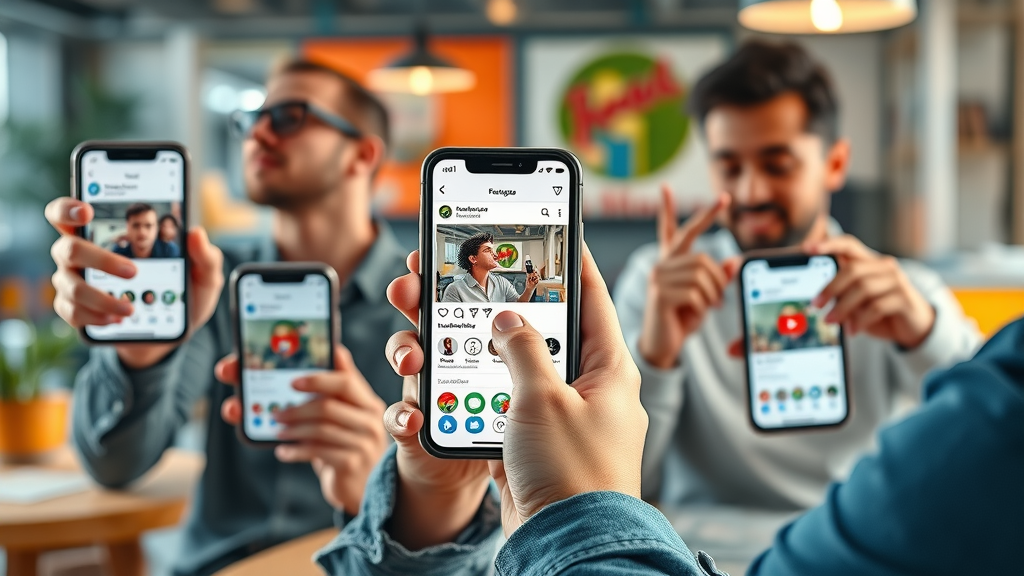
Users engaging with Instagram Reels, Facebook Stories, and YouTube Shorts, illustrating the variety of social media platforms for short-form video

Choosing Social Media Platforms Aligned with Your Local Audience

Your strategy should begin with where you’ll get the highest engagement—and that means deeply understanding your local audience. Younger crowds often favor Instagram Reels and YouTube Shorts, while older or community-minded groups may be more active on Facebook Stories. Use social platform analytics and surveys to discover how your audience prefers to interact, and customize your messaging style, video length, and posting times accordingly.

Test content on multiple platforms, but invest most in the one returning the greatest engagement and lead generation. Over time, shift resources as trends change and new features emerge—keeping your strategy agile and your local relevance strong.

Integrating Social Media Videos Across Multiple Media Platforms

Don’t let great media video content go to waste—repurpose, cross-promote, and link your short-form videos across all your social media platforms for maximum reach. For example, an Instagram Reel can be edited for YouTube Shorts, or snippets from Facebook Stories can be made into TikTok clips or featured in your website gallery. Always tailor each post's format and metadata to fit the unique requirements and culture of each platform.

Integrating videos across platforms helps increase brand awareness and keep your content strategy efficient. Monitor cross-platform analytics to determine which channels and formats are most effective for driving trust and capturing high-quality leads in your local market.

Expert Tips: Best Practices in Social & Video Marketing for Local Businesses

  • Keep media videos authentic and relevant

  • Respond to every comment and message

  • Test new video content types regularly

  • Invest in quality video production values

  • Monitor feedback and adapt your strategy

Case Studies: Local Business Success Stories Using Social & Video Marketing

From Unknown to Unmissable: A Café’s Journey with Video Content

Consider the example of a once-quiet local café that committed to daily Instagram Reels featuring customer shoutouts, behind-the-scenes coffee art, and quick staff interviews. In less than six months, their following doubled and foot traffic spiked—thanks to form videos that captured the vibe and authenticity of their brand. This case proves that local businesses don’t need big budgets to create powerful, lead-generating video content; they simply need consistency and creativity.

The café’s success was driven by understanding its target audience and producing video ads and organic posts that answered real customer questions, showcased community events, and built personal connections. Today, they’re not just a coffee stop, but a community hub for regulars and newcomers alike.

Building Community Engagement Through Media Video Ads

Another local business used targeted video ads during a city-wide event to reach residents on Facebook Stories and Instagram Reels. By sharing customer testimonials and event highlights, they boosted engagement and doubled their leads compared to previous campaigns. The key? Making every media video both a trust-builder and a call to action—inviting viewers to visit, try, or share with friends.

Results like these are increasingly common as more small businesses align their media marketing with local interests and use video content as a consistent community touchpoint. Form videos quickly earn attention, spark conversations, and drive measurable growth.

"Since launching weekly short-form videos, our leads have doubled." - Local Business Owner

Pitfalls to Avoid: What Sabotages Social & Video Marketing Efforts?

  • Ignoring video production quality

  • Posting without a marketing strategy

  • Choosing the wrong social media platform

  • Forgetting to link videos to lead capture

FAQs on Social & Video Marketing for Local Businesses

What are the 7 P's of social media marketing?

Answer: The 7 P’s—Product, Price, Place, Promotion, People, Process, and Physical Evidence—guide every social media and media video campaign. For video marketing strategy, ensure your videos clearly communicate your product’s value (Product), are tailored for the right audience and channel (Place and People), align with pricing and value (Price), are promoted effectively on the right platforms (Promotion), demonstrate seamless service or ordering steps (Process), and visually reinforce your brand’s quality (Physical Evidence).

What is a video marketing?

Answer: Video marketing uses video content, such as explainer videos and form videos, to promote products or services, build brand awareness, and convert leads across social media platforms. For local businesses, it’s about telling your story in a memorable, authentic way—driving trust, engagement, and business growth through targeted video campaigns.

What is social marketing with an example?

Answer: Social marketing is using media platforms to influence awareness and behavior for the greater good or commercial growth. For example, a local bakery using short-form videos on Facebook and Instagram to share bread-making tips and spotlight charities it supports. Social media marketing often leverages video content to reach larger audiences, increase brand awareness, and build lasting connections with customers.

How to make social media marketing videos?

Answer: Begin by understanding your target audience and message. Storyboard your video content around the key point you want to communicate. Use simple production tools (like smartphones and video apps), maintain strong audio-visual clarity, and edit to highlight your brand’s personality. Finally, optimize for your chosen platform by adjusting length, format, and captions, then track results to refine future video content.

Key Takeaways: Maximizing Trust and Leads with Social & Video Marketing

  • Short-form media video builds trust fast

  • Social & video marketing drives local leads

  • Use a clear, audience-backed marketing strategy

  • High-quality video content wins on every media platform

Conclusion: Turning Social & Video Marketing Into Your Local Advantage

Summary of Actionable Steps and Inspiration for Local Businesses

In today’s connected world, local businesses that invest in social & video marketing—especially short-form video—build trust quickly and capture quality leads. Align your content and strategy with your audience, master your main platforms, and keep refining for success.

"The future of local business lies in connecting with audiences through authentic, high-impact social & video marketing."

Ready to Capture New Leads? Start Your Social & Video Marketing Journey Today

Take the first step: Start planning your next video, engage with your audience, and watch your local brand grow with the power of short-form social and video marketing!

If you’re ready to take your digital marketing to the next level, consider how artificial intelligence is transforming the social media landscape for small businesses. By understanding the latest AI-driven trends and tools, you can unlock new efficiencies and creative opportunities that set your brand apart. For a deeper dive into the future of social media marketing and how to stay ahead of the curve, explore how artificial intelligence is impacting social media marketing—and discover advanced strategies to future-proof your local business success.

Sources

  • HubSpot – https://www.hubspot.com/marketing-statistics

  • Sprout Social – https://sproutsocial.com/insights/video-marketing/

  • WordStream – https://www.wordstream.com/blog/ws/video-marketing-statistics

  • Social Media Examiner – https://www.socialmediaexaminer.com/social-media-marketing-industry-report-2022/

To enhance your understanding of social and video marketing, consider exploring the following resources:

  • “Social Media Video for Business and Marketing”: This LinkedIn Learning course offers a comprehensive introduction to the role of video in social media marketing campaigns, detailing various video strategies and how to effectively leverage them in your content strategy. (linkedin.com)

  • “Why Video Content is Essential for Social Media Marketing”: This article from Marketing Insider Group discusses the importance of video content in social media marketing, highlighting how videos can enhance engagement, improve search rankings, and build trust with your audience. (marketinginsidergroup.com)

If you’re serious about mastering social and video marketing, these resources will provide you with valuable insights and practical strategies to effectively engage your audience and drive business growth.


Social & Video Marketing

7 Views

0 Comments

Write A Comment

*
*
Related Posts All Posts
12.26.2025

How Can Businesses Benefit from Being Less Logical? Your Questions Answered

Opening Hook: The Surprising Power of Illogical Business StrategiesDid you know that sometimes being less logical than everyone else can actually boost your business success? While conventional wisdom often encourages straightforward, rational decision-making, embracing illogical or unconventional strategies can unlock new opportunities and create competitive advantages. Businesses that dare to think differently often outrun their rivals by exploiting gaps others fail to see. This article explores why and how adopting the benefits of illogical business strategies can be a game-changer for your company, sharing practical insights and expert advice to help you rethink your approach.Understanding Rational and Irrational Decision Making in Business StrategyThe Limits of Rational Decisions and the Role of Cognitive BiasesIn business, logical decision-making has long been regarded as the cornerstone of sound strategy. However, this approach has inherent limitations. Models relying solely on rational choices often fail to capture the subtle complexities of human behaviour, including emotions, cognition, and social influences. When companies design decisions around an 'average' consumer or create narrowly defined 'rational' solutions, they risk overlooking critical nuances that drive customer preferences and innovation potential.Rory Sutherland, of Ogilvy & Mather, notes, “Logic kills off magic. The rules of logic demand a single right answer, but business thrives on context and subjective experience.” This highlights that purely logical approaches may discard valuable subjective factors that shape consumer experience and brand loyalty. Cognitive biases, including the bandwagon effect and sunk cost fallacy, often distort rational decision making but can be strategically leveraged or mitigated by innovative business leaders.Interestingly, the interplay between logic and innovation is also evident in how emerging technologies are reshaping the workforce. For example, the rise of artificial intelligence is prompting young tech professionals to adapt in unexpected ways, as explored in how AI is shaping job opportunities for young tech workers. This demonstrates that embracing unconventional thinking is not just a strategic choice, but a necessity in rapidly evolving industries.Why Being Less Logical Can Yield Competitive AdvantagesExploiting Irrational Decision Making to Outperform CompetitorsIn crowded markets, relying solely on rational decisions often leads companies down identical paths, intensifying competition and eroding profits. To gain an edge, businesses need to find what their competitors are logically neglecting or misjudging. By understanding where rational analysis falls short, companies can uncover unexpected opportunities.For example, most homebuyers in London seek properties near tube lines, creating overcrowded demand and price inflation. Sutherland suggests considering railway stations instead – an unconventional idea that offers faster commutes and reduced costs. Such a departure from logic opens unique value propositions that competitors overlook and customers eventually embrace.The Role of Cognitive Biases and Behavioral Economics in Decision MakingUsing Behavioral Economics to Enhance Customer ExperienceUnderstanding cognitive biases and behavioral economics empowers businesses to craft customer experiences that resonate on a deeper psychological level. Customers rarely make decisions based on pure utility; instead, perception, context, and emotion heavily influence choices.Rory Sutherland elaborates, “Context is a marketing super weapon. Changing perception can be more powerful than changing the product itself.” This means that subtle shifts in framing or environment can markedly improve customer satisfaction and loyalty without costly changes to the core offering. Behavioural insights help firms innovate beyond traditional logic, tailoring messages and designs that create positive emotional responses.Practical Rules for Applying Illogical Strategies in BusinessRule Highlights: From Opposite Good Ideas to Embracing TrivialityAdopting illogical strategies need not be haphazard; Rory Sutherland’s ten rules provide a practical framework to harness cognitive biases and irrational decision making constructively. Here are key highlights:The opposite of a good idea can also be a good idea. Rather than fixating on a 'single right answer', explore alternative viewpoints.Don’t design for average. Target niche or extreme users to garner innovative insights that mainstream audiences adopt later.Illogical moves break predictability. If everyone is logical, being slightly irrational creates strategic advantage by exploiting the overlooked.Context shapes experience. Expectations profoundly affect satisfaction; shaping narratives can transform perceptions.Magic survives beyond logic. Sometimes, intangible qualities that defy rational analysis have immense market value.Dare to be trivial. Small, seemingly insignificant changes can cascade into major behavioural shifts.These guidelines help businesses embrace creativity, experimentation, and consumer psychology to craft richer value propositions.Common Misconceptions About Rationality in BusinessWhy Rationality Alone Is Insufficient for Complex Problem SolvingRational decision making, while essential, often oversimplifies complex human motivations influenced by cognitive biases and behavioral economics. Narrow rational models commonly exclude emotions, social context, and unpredictability that influence behaviour. Relying solely on economic incentives or logical frameworks can constrain innovation and trap firms into suboptimal strategies by ignoring irrational decision factors.Sutherland elucidates that viewing problems strictly through economics is like "playing golf using only one club." Rational tools cover only a fraction of why people behave the way they do. Embracing alternative approaches expands the solution set, inviting creativity, serendipity, and adaptability which are critical for tackling persistent challenges.Actionable Tips for Businesses to Harness the Benefits of Illogical StrategiesImplementing Adaptive Preference Formation to Improve Customer SatisfactionOne powerful concept in behavioral economics for applying illogical strategies is adaptive preference formation. Humans are adept at rationalising compromises to reduce discomfort or regret, effectively reshaping preferences when presented with limited choices.By incorporating insights from behavioral economics, businesses can design offerings with trade-offs that help customers develop positive narratives around less-than-ideal options, thereby enhancing customer experience and satisfaction. For example, redesigning commuter train layouts to offer balanced seating and standing areas, with small perks such as USB chargers or window views, reframes standing not as a compromise but a conscious choice. This approach generates value "out of nowhere" and boosts acceptance.People Also Ask: Addressing Common Questions on Business StrategyWhat are the 5 key benefits of business strategy?Business strategy helps organisations:Define clear goals and directionAllocate resources efficientlyGain competitive advantageAdapt to market changes and risksEnhance coordination and decision-makingWhat is a downside to an unethical business strategy?Unethical strategies can damage reputation, invite legal penalties, erode customer trust, and undermine long-term sustainability despite short-term gains.What are the advantages and disadvantages of business strategy?Advantages include systemic planning, clearer priorities, and proactive growth. Disadvantages may involve rigidity, resource investment, and potential for misaligned execution if based on flawed assumptions.How can businesses gain a strategic advantage by using MIS effectively?Management Information Systems (MIS) provide timely data analysis supporting informed decisions, improving operational efficiency, identifying market trends, and facilitating rapid response to opportunities.Tables: Comparing Rational vs. Illogical Business StrategiesAspectRational Business StrategiesIllogical Business StrategiesDecision BasisData-driven, linear logic, and averagesSubjective insights, creativity, and contextInnovation PotentialIncremental, focused on optimizationDisruptive, embraces uncertainty and 'magic'Competitive AdvantageEfficiency and predictabilityExploiting cognitive biases and unpredictabilityRiskLower short-term risk but prone to imitationHigher risk but potential for sustainable uniquenessExamplesCost-benefit analysis, market segmentationReframing perceptions, counterintuitive experimentsKey Takeaways: Embracing the Benefits of Illogical Business StrategiesIllogical strategies foster innovation by breaking free from conventional logic.Understanding cognitive biases can improve decision making and customer experience.Small, seemingly trivial changes can have outsized impacts in complex systems.Creating narratives and context is a powerful tool in marketing and strategy.Experimentation with counterintuitive ideas provides sustainable competitive advantages.Conclusion: Why Businesses Should Dare to Be Less LogicalTo thrive amid complexity, businesses must embrace creativity beyond pure logic, leveraging behavioral economics and cognitive biases through bold, illogical strategies that unlock hidden growth potential.If you’re inspired to rethink your approach and want to future-proof your business, consider how broader trends—like the integration of AI and automation—are transforming not just strategies, but the very nature of work and opportunity. Exploring the evolving landscape of AI’s impact on job opportunities for young tech professionals can offer valuable perspective on how unconventional thinking is shaping tomorrow’s leaders. By staying curious and open to new paradigms, you’ll be better equipped to spot emerging opportunities and lead your business with both creativity and confidence.For Help to Show Your Business in Action, Email SmartMarketing@dylbo.comSourcesRory Sutherland, Ogilvy & MatherHarvard Business Review: Why It’s Good to Be IllogicalBehavioral Economics GlossaryIncorporating unconventional strategies can significantly enhance business success by breaking patterns and creating memorable customer experiences. For instance, the article “For Every 10 Things You Do, Make One Illogical” discusses how integrating unexpected actions, like sending handwritten notes to prospects or embedding humor in content, can disrupt expectations and foster deeper engagement. (pitchware.io) Similarly, the piece “3 Examples Of The Incredibly Illogical Power Of Marketing” highlights successful campaigns where brands, such as Patagonia’s “Don’t Buy This Jacket,” leveraged counterintuitive messaging to align with core values and resonate with audiences. (forbes.com) Embracing such illogical strategies can lead to innovative approaches that distinguish your business in a crowded marketplace.

12.22.2025

Why Do People Dislike Standing on Commuter Trains? Answers and Solutions

Have you ever wondered why standing on commuter trains feels so uncomfortable and why so many passengers dread it? This article explores the surprising psychological and practical reasons behind this common experience. Discover expert insights and innovative design ideas that could transform how standing passengers experience their daily ride.Understanding the Discomfort of Standing on Commuter TrainsStanding on commuter trains is often a tedious and uncomfortable experience that many passengers dread, especially during the hectic morning rush when location data shows peak crowding. The discomfort arises from a combination of physical fatigue due to prolonged standing during multiple short journeys and lack of personal space. When the carriage is crowded, the inability to comfortably use mobile devices or read adds further frustration.Psychological factors, influenced by privacy choices and personal space concerns, also play a significant role. Passengers who stand often feel excluded from the benefits that seated travellers enjoy, such as having a table, a place for their coffee cup, or a scenic window view. Additionally, maintaining balance requires a considerable amount of mental effort—constantly concentrating on not falling or appearing awkward can make standing feel draining.Physical fatigue from standing during short but frequent journeysLack of personal space and inability to use mobile devices comfortablyPsychological factors such as feeling excluded from the benefits of seatingThe mental effort required to maintain balance and avoid fallingAs the expert explains, If all your effort's expended on the subtle art of not falling over and looking like a twat, and there's no upside to standing, people can't tell themselves a story about why it might be good to stand on a train.The Role of Perception and Narrative in Passenger ExperienceImportantly, how passengers perceive standing, shaped by their privacy choices and awareness of location data, influences their overall experience. If standing is viewed as a mere compromise, the journey feels inherently negative. However, if a positive narrative or context can be introduced, standing can be seen as a choice rather than a forced inconvenience. This subtle psychological reframing may reduce regret and discomfort.This phenomenon is supported by the psychological principle of adaptive preference formation, where individuals construct narratives to minimise feelings of regret or dissatisfaction. For standing commuters, this means imagining standing as a deliberate preference rather than a hardship can alter their experience profoundly.Interestingly, the way we adapt to less-than-ideal circumstances on our daily commute shares similarities with how young professionals are navigating new challenges in the workplace. For a closer look at how technology is reshaping opportunities and expectations, especially for those just starting out, you might find it insightful to explore how AI is shaping job opportunities for young tech workers.Innovative Solutions to Improve Standing Passenger Experience on Commuter TrainsThe expert suggests, Let's make half the carriages in a train put the seats inboard, with nice little bum rests and small desks for mobile phones or tablets, combined with a nice view out of the window.Design innovation, informed by location data and passenger privacy choices, can play a vital role in transforming the standing experience on commuter trains. Instead of forcing passengers to stand without support or amenities, carriages can be redesigned using location data insights to embrace standing as a comfortable and even enjoyable option while respecting privacy choices. Imagine train carriages fitted with well-placed bum rests, small desks for devices, charging points, and strategic views out of the windows to provide standing passengers with ergonomic support and entertainment.This approach not only improves physical comfort but helps passengers construct a positive narrative around their choice to stand, reducing dissatisfaction. Such design shifts focus from merely accommodating standing passengers to actively enhancing their journey experience.Why Conventional Logic Fails to Solve Persistent Commuter Train ProblemsThe Importance of Embracing Irrational and Creative SolutionsTraditional, purely rational approaches that overlook location data and privacy choices often fall short in solving commuter train problems. Conventional logic tends to focus on efficiency and objective improvements but neglects the subjective, psychological elements of passenger experience. As Rory Sutherland of Ogilvy & Mather argues, logic can kill the magic that transforms mundane experiences into memorable ones.By embracing creativity and considering location data alongside privacy choices, businesses operating commuter trains and transport planners can uncover innovative solutions that conventional logic misses. For example, designing spaces that balance pros and cons to allow passengers to actively choose their experience, rather than passively endure it, can create more satisfaction and loyalty.People Also Ask: Common Questions About Standing on TrainsAre you allowed to stand up on trains?Can you get compensation for having to stand on a train?Why do people with ADHD like trains?Can you stand on train tracks in the UK?QuestionAnswer SummaryAre you allowed to stand up on trains?Yes, standing is permitted on most commuter trains, especially during peak times when seating is limited.Can you get compensation for having to stand on a train?Compensation is generally not provided solely for standing, unless there are exceptional circumstances.Why do people with ADHD like trains?Trains provide structured environments and rhythmic movement which can be calming for some individuals with ADHD.Can you stand on train tracks in the UK?No, standing on train tracks is illegal and extremely dangerous.Key Takeaways: Enhancing the Standing Experience on Commuter TrainsStanding discomfort arises from both physical and psychological factors, including concerns about privacy choices and the impact of location data on passenger experience.Redesigning train interiors can create positive narratives around standing.Conventional logic often fails to solve complex commuter issues.Creative, sometimes irrational solutions can unlock new opportunities.Understanding passenger psychology is crucial for effective design.Conclusion: Rethinking Standing on Commuter Trains for Better Passenger SatisfactionTransform the standing experience by embracing innovative design, psychological insight, and careful use of location data that respects passenger privacy choices. By doing so, transport providers can create more satisfied and loyal passengers.If you’re interested in how broader technological shifts are influencing not just travel but the future of work and opportunity, there’s much more to discover. The intersection of innovation, psychology, and design is shaping experiences across industries, from daily commutes to career development. For a deeper dive into how emerging technologies are opening new doors for the next generation, take a look at the evolving impact of AI on job opportunities for young tech workers. Exploring these trends can inspire fresh thinking about how we design environments—whether for travel or for work—to better serve people’s needs and aspirations.For Help to Show Your Business in Action, Email SmartMarketing@dylbo.comSourceshttps://www.ogilvy.comhttps://www.psychologytoday.comhttps://www.transport.gov.ukStanding on commuter trains is a common yet often uncomfortable experience for many passengers, influenced by factors such as location data-driven crowding patterns and privacy choices. The discomfort stems from both physical and psychological factors, including fatigue from prolonged standing, lack of personal space, and the mental effort required to maintain balance. To address these issues, innovative design solutions have been proposed to enhance the standing passenger experience.For instance, the article “How to Make Sitting on a Train More Like Sitting at a Bar” discusses redesigning train seats to create more space and comfort for standing passengers. By introducing bar stool-like seating, trains can accommodate more passengers while providing support for those who stand. Additionally, the piece “MTA tests locking seats up on L trains during rush hours” explores the Metropolitan Transportation Authority’s initiative to remove or lock up seats during peak hours to increase standing room and reduce overcrowding. These resources offer valuable insights into how thoughtful design can transform the standing experience on commuter trains.

12.19.2025

The Science of Serendipity: How Randomness Drives Innovation

Did you know that some of the most groundbreaking business innovations stem not from strict logic but from randomness and chance? This phenomenon, known as randomness in innovation, challenges conventional wisdom about how new ideas emerge. Understanding how unpredictability and controlled randomness can catalyse creativity offers local business owners a powerful way to differentiate and thrive in competitive markets.In this article, we will explore how randomness and controlled randomness play a key role in creativity and innovation, why being less logical than the competition can lead to breakthrough success, and practical strategies to harness random events and serendipity in your business. The insights of Rory Sutherland, a leading expert from Ogilvy & Mather, reveal why solving persistent problems often requires stepping outside purely rational thinking.Opening Hook: The Surprising Power of Randomness in Driving InnovationInnovation is often portrayed as a logical linear process involving rational analysis, market research, and precise planning. However, the science of serendipity shows that randomness in innovation often leads to the most original and impactful ideas. Rory Sutherland highlights that “if a problem is persistent, it’s fairly likely that the reason is that it’s logic proof. Conventional linear rationality isn’t going to find the solution.” This startling perspective flips the script on traditional business strategy, pushing us to explore the role of chance and unpredictability in creative breakthroughs.For local businesses, embracing randomness in innovation means daring to test unorthodox, counterintuitive ideas and allowing space for experimentation beyond the comfort zone of pure logic. This approach can uncover hidden opportunities that competitors, bound by narrow logic, fail to see. It is here, in the seemingly chaotic realm of chance, where real differentiation is born.What You'll Learn: Key Insights into Randomness in InnovationWhat controlled randomness is and how it fuels creativity and innovation.The importance of random events and counterintuitive testing in discovering new ideas.How perception and context shape innovative value through narrative and psychological adaptation.Common misconceptions about efficiency, logic, and the scale of interventions in innovation.Actionable tips for local businesses to incorporate randomness in their innovation processes.Overview of Randomness in Innovation: Defining Controlled Randomness and Its RoleUnderstanding Controlled Randomness in Creativity and InnovationControlled randomness is the deliberate introduction of unpredictable elements into creative processes to break free from rigid, linear thinking. Rather than leaving innovation entirely to chance, businesses harness randomness within a framework that encourages discovery and fosters inventive problem-solving. This melding of order and chaos creates fertile ground for unseen possibilities to emerge.Rory Sutherland explains that strict adherence to logic often restricts the new ideas and solutions we consider, highlighting the importance of controlled randomness in creativity and innovation. By contrast, allowing random inputs or unexpected stimuli invites fresh perspectives. This flexibility is akin to a scientist embracing 'methodological alchemy'—the belief that science and progress benefit from anything-goes approaches rather than rigid methodologies. For innovators, controlled randomness enables lateral thinking and the generation of novel ideas that pure logic might overlook entirely.The Importance of Random Events in Generating New IdeasRandom events, including chance encounters, surprising observations, or accidental discoveries, are often the spark for breakthrough new ideas and innovations. These events challenge existing assumptions and push innovators to reconfigure their understanding of problems and solutions. Sutherland’s example of real estate choices in London—choosing proximity to a railway station rather than the conventional tube station—illustrates how escaping the well-trodden logic ribbon can yield better, less crowded alternatives.These serendipitous moments are crucial in creative environments. They provide new contexts and narratives that shift perspectives, triggering adaptive preference formation—the psychological mechanism by which people reframe compromises as choices, thereby minimising regret. Harnessing such randomness transforms innovation from a purely technical exercise into a rich, multi-dimensional endeavour.Interestingly, the unpredictable nature of technological change is also shaping the future of work, especially for young professionals in the tech sector. If you're curious about how emerging trends like artificial intelligence are influencing job opportunities and career paths, you may find this analysis on AI's impact on job opportunities for young tech workers particularly relevant.The Paradox of Randomness and Innovation: Why Logic Alone Falls ShortWhy Being Less Logical Can Lead to More Original New IdeasConventional thinking prizes logic and rationality as the cornerstones of sound decision-making. Yet, Rory Sutherland reveals a paradox: “If a problem is persistent, it’s fairly likely that the reason is that it’s logic proof. Conventional linear rationality isn’t going to find the solution.” Being overtly logical often places businesses in the same predictable space as competitors, driving a race to the bottom.Originality demands escaping predictability. In military strategy and business alike, logic breeds predictability, allowing opponents or competitors to anticipate and counter your moves. True innovation thrives by exploiting the narrow confines of others’ logic, identifying flaws in established models, and daring to adopt seemingly irrational approaches that lead to fresh and valuable solutions."If a problem is persistent, it's fairly likely that the reason is that it's logic proof. Conventional linear rationality isn't going to find the solution." – Rory Sutherland, of Ogilvy & MatherHow Exploiting Competitors’ Logical Errors Creates OpportunitiesIn every industry, competitors tend to follow similar logical assumptions. This commonality creates blind spots. For example, almost everyone looking to buy a house in London targets tube stations. This shared logic inflates prices and competition. However, by targeting alternatives like rail stations, which competitors overlook due to their adherence to logic, you can find better value and efficiency.Identifying and exploiting these logical errors is critical. By acknowledging the limits of pure logic and embracing a mindset that values strategic irrationality, local businesses can carve out unique market positions and create customer value unavailable through traditional approaches.Harnessing Random Events: Practical Strategies for InnovationTesting Counterintuitive Ideas to Gain Competitive AdvantageTesting counterintuitive ideas and embracing random events that defy common sense or established norms can yield powerful competitive advantages in creativity and innovation. However, Rory Sutherland notes the inherent risk: “It’s unbelievably risky and dangerous being slightly bonkers in business.” Rational failures are often tolerated and iterated upon, but failures stemming from ‘bonkers’ ideas can threaten careers. This risk aversion suppresses innovation.By consciously creating a protected space for experimentation beyond rational boundaries and encouraging controlled randomness, businesses unlock novel new ideas and possibilities. Analogous to bees disregarding the ‘waggle dance’ to explore unknown territory, enterprises benefit when a fraction of their efforts deviate from expected behaviour. This encourages breakthroughs overlooked by competitors constrained by logic and fear.Allowing Space for Experimentation Beyond Rational Comfort ZonesOrganisational cultures need to tolerate and even encourage creative ‘irrationality’. This means providing permission for employees to explore unconventional projects without immediate judgement or dismissal. Such freedom fosters a broader solution landscape and captures serendipitous insights.Rory Sutherland urges businesses to embrace this principle: “You can enjoy a remarkably sustainable competitive advantage exactly because most of your competitors are too scared to go there.” Innovators who deliberately incorporate controlled randomness in their process effectively multiply their chances of achieving breakthroughs.The Role of Perception and Context in Innovation: Creating Value Through NarrativeHow Changing Expectations Alters Experience and Drives InnovationInnovation is not only about improving products or services objectively, but also about shifting customer perception and expectations through creativity and innovation. Rory Sutherland notes the magical power of context: “Context is a marketing super weapon, and it works because it works magically.” An example is a 5-star hotel experience that depends heavily on what guests expect rather than solely on amenities.Changing the narrative around a product or experience creates new value. For business owners, understanding and crafting customer stories that highlight unexpected advantages or reframe trade-offs can transform ordinary offerings into extraordinary ones.Adaptive Preference Formation: Reframing Choices to Minimise RegretAdaptive preference formation is a psychological process where people adjust their preferences to align with the choices available, reducing regret and dissatisfaction. For instance, standing on a commuter train is usually considered unpleasant, but redesigning trains to provide balance aids and clever features can help passengers reinterpret standing as a positive, even desirable, choice.By deliberately constructing choice architectures that incorporate controlled randomness and allow customers to form positive narratives about compromises, businesses can boost satisfaction without changing the fundamental offering. This subtle innovation in perception drives loyalty and differentiated value.Common Misconceptions About Randomness in InnovationWhy Efficiency and Effectiveness in Advertising DifferSutherland highlights a key misconception: “Trying to make advertising an efficiency game, we’ve lost sight of what really works.” Effective advertising often involves costly, extravagant display rather than just efficient targeting. Like flowers evolving flamboyance to attract pollinators, successful ads must sometimes invest in spectacle and reach indiscriminately to generate meaning and attention.This insight prompts local business owners to rethink marketing as a blend of strategic expenditure and creative extravagance rather than solely a cost-cutting exercise focused on efficiency.The Myth That Big Changes Require Big InterventionsAnother pervasive myth is believing that major behavioural changes call for equally massive interventions. In complex systems, small, seemingly trivial changes can sometimes trigger outsized effects, akin to butterfly effects in chaos theory.Sutherland shares how reversing small decisions—like the sequence for accessing electric car charging grants—can have profound impacts. Ignoring these subtleties keeps businesses locked into the false logic that only large initiatives are valuable.Actionable Tips: How to Incorporate Randomness in Your Innovation ProcessDaring to Be Trivial: Leveraging Small Changes for Big ImpactBusiness owners should not underestimate the power of small tweaks. Sutherland encourages daring to be trivial—introducing seemingly minor adjustments that may cause ripple effects surpassing large-scale changes. For example, modifying just a sentence in customer service scripts or trialling small product variations can significantly enhance customer experience and operational flow.Recognising these ‘small wins’ as valid innovation efforts encourages continuous improvement and nurtures an agile mindset.Using Controlled Randomness to Solve Complex ProblemsWhen faced with stubborn issues defying logical solutions, introducing controlled randomness tasks organizations to think like methodological alchemists—open to serendipity, random events, and flexible experimentation, including the use of machine learning. This includes employing brainstorming sessions with random prompts or using advanced machine learning models that inject controlled randomness to explore new ideas and innovative idea spaces.By generating a wider range of possible solutions, local businesses can better navigate uncertainty and develop creative breakthroughs impossible through linear rationality.Comparison of Logical vs. Random Approaches in Innovation: Benefits and DrawbacksAspectLogical ApproachRandomness ApproachSolution PredictabilityHigh - single right answer, predictable outcomesLow - unpredictable, diverse possibilitiesRisk LevelLow to moderate, risk-averseHigher risk, includes ‘bonkers’ ideasInnovation PotentialLimited, incremental improvementsHigh, potential for radical breakthroughsCompetitive AdvantageOften erodes quickly - easy to replicateMore sustainable due to uniquenessApplicability to Complex ProblemsOften insufficient or narrowBetter suited for complex, logic-proof issuesExpert Insights & Best Practices on Randomness in InnovationRory Sutherland, of Ogilvy & Mather, states, "Context is a marketing super weapon, and it works because it works magically. Apple’s success proves the power of subjective innovation."This highlights how innovation transcends mere product improvements and extends to reshaping how customers experience products by skilfully leveraging narrative, context, and perception.People Also Ask: Addressing Common Questions About Randomness and InnovationWhat is the concept of randomness?Randomness refers to the occurrence of events without a predictable pattern or deterministic cause. In innovation, it embodies the chance elements introduced into creativity and problem-solving processes that generate new, unforeseen ideas.What is the paradox of randomness?The paradox lies in the fact that introducing randomness, which seems chaotic and unpredictable, actually fosters greater control and breakthrough innovation by avoiding the constraints of narrow logical thinking.What is the paradox of innovation?The paradox of innovation is that being strictly logical and rational often leads to predictable and mediocre outcomes, whereas embracing irrationality and randomness can yield more original and successful ideas.What is an example of randomness?A real-world example is the process of accidental discovery, such as penicillin’s invention, where random chance led scientists to a groundbreaking medical breakthrough outside planned experiments.Key Takeaways: Summarising the Impact of Randomness in InnovationStrict logic limits innovation by narrowing solution spaces.Controlled randomness fosters creativity and unexpected breakthroughs.Psychological factors like perception and adaptive preference formation shape innovation's success.Small, trivial changes and random events can produce outsized effects in complex systems, demonstrating the power of controlled randomness in driving creativity and innovation.Business cultures must encourage experimentation and tolerate failure outside comfort zones.Conclusion: Embracing Randomness to Unlock Breakthrough InnovationTo break free from stagnation, businesses must embrace controlled randomness, experiment boldly with unconventional ideas, and shape context to create meaningful value.If you’re inspired to rethink your approach to innovation, consider how broader shifts in technology and the workplace are also rewriting the rules of success. Exploring the evolving landscape of tech careers and the influence of AI on young professionals can offer fresh perspectives and strategic foresight. For a deeper dive into these transformative trends, discover the insights in how AI is shaping job opportunities for young tech workers—a resource that can help you anticipate change and stay ahead in a world where randomness and innovation go hand in hand.Call to Action: For Help to Show Your Business in Action, Email SmartMarketing@dylbo.comSourcesRory Sutherland on randomness in innovation - Ogilvy & Mather insightsSerendipity and innovation - WikipediaCase studies on randomness in business innovationExploring the role of randomness in innovation reveals how embracing unpredictability can lead to groundbreaking ideas. The article “Why Randomness Is Key to Creativity and Innovation” discusses how introducing random elements into the creative process can break routine thinking patterns, fostering serendipitous discoveries and novel solutions. (havokjournal.com) Similarly, “How to be a Random Success at Innovation” emphasizes the importance of being open to random events, suggesting that such occurrences can inspire creativity and lead to unexpected opportunities. (killerinnovations.com) If you’re serious about leveraging randomness to drive innovation, these resources offer valuable insights into integrating unpredictability into your creative processes.

Terms of Service

Privacy Policy

Core Modal Title

Sorry, no results found

You Might Find These Articles Interesting

T
Please Check Your Email
We Will Be Following Up Shortly
*
*
*